Implementing Inheritance
Inheritance is a familiar tool for programmers when working with shared behavior or data. Unfortunately, it is not natively supported in Charon. However, you can achieve similar functionality using alternative approaches.
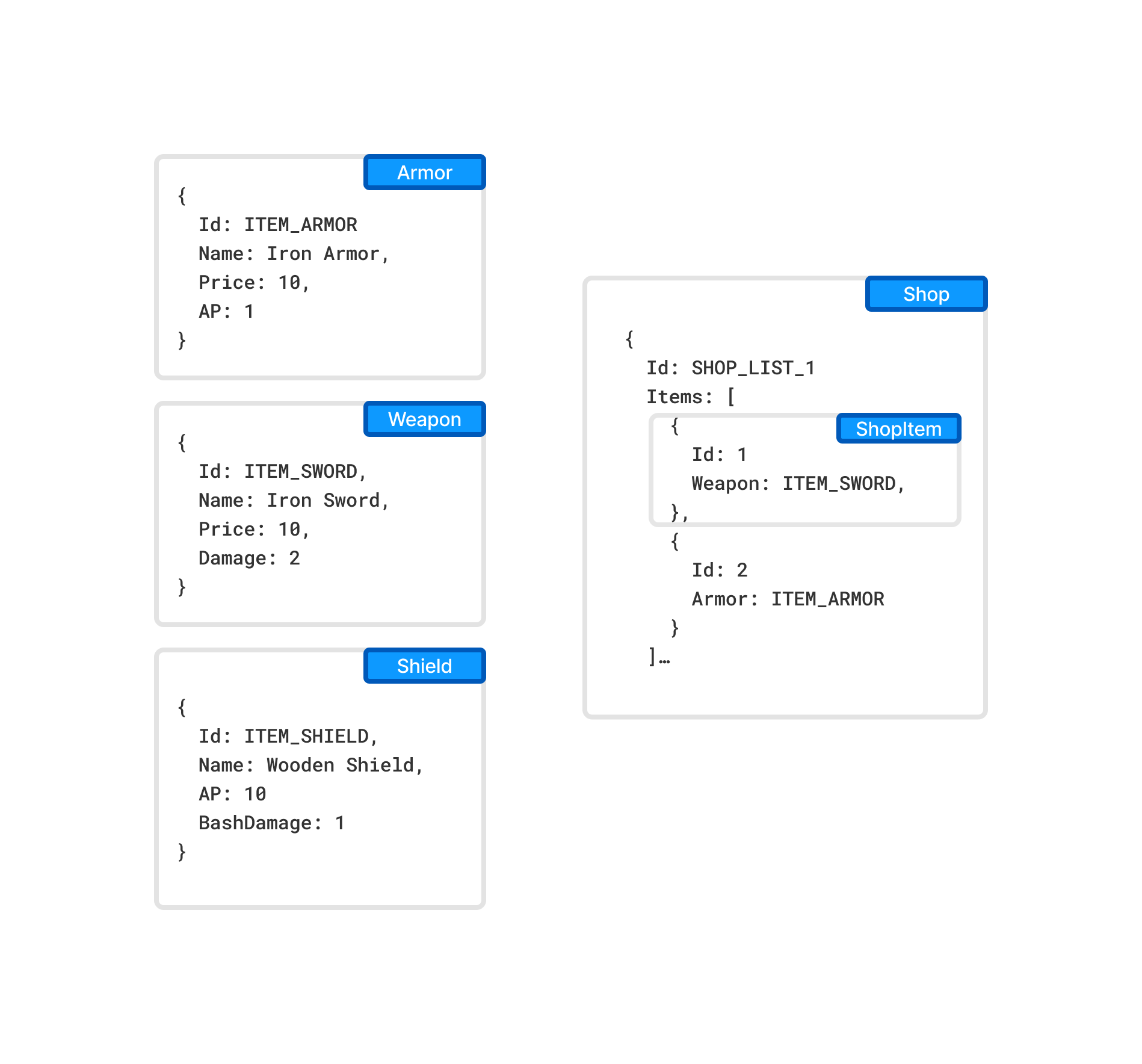
For example, imagine you have three different document types: Armor, Weapon, and Shield. You want to include all these items in a Shop list of sellable goods. In traditional inheritance, you could create a base type to unify these documents and refer to it.
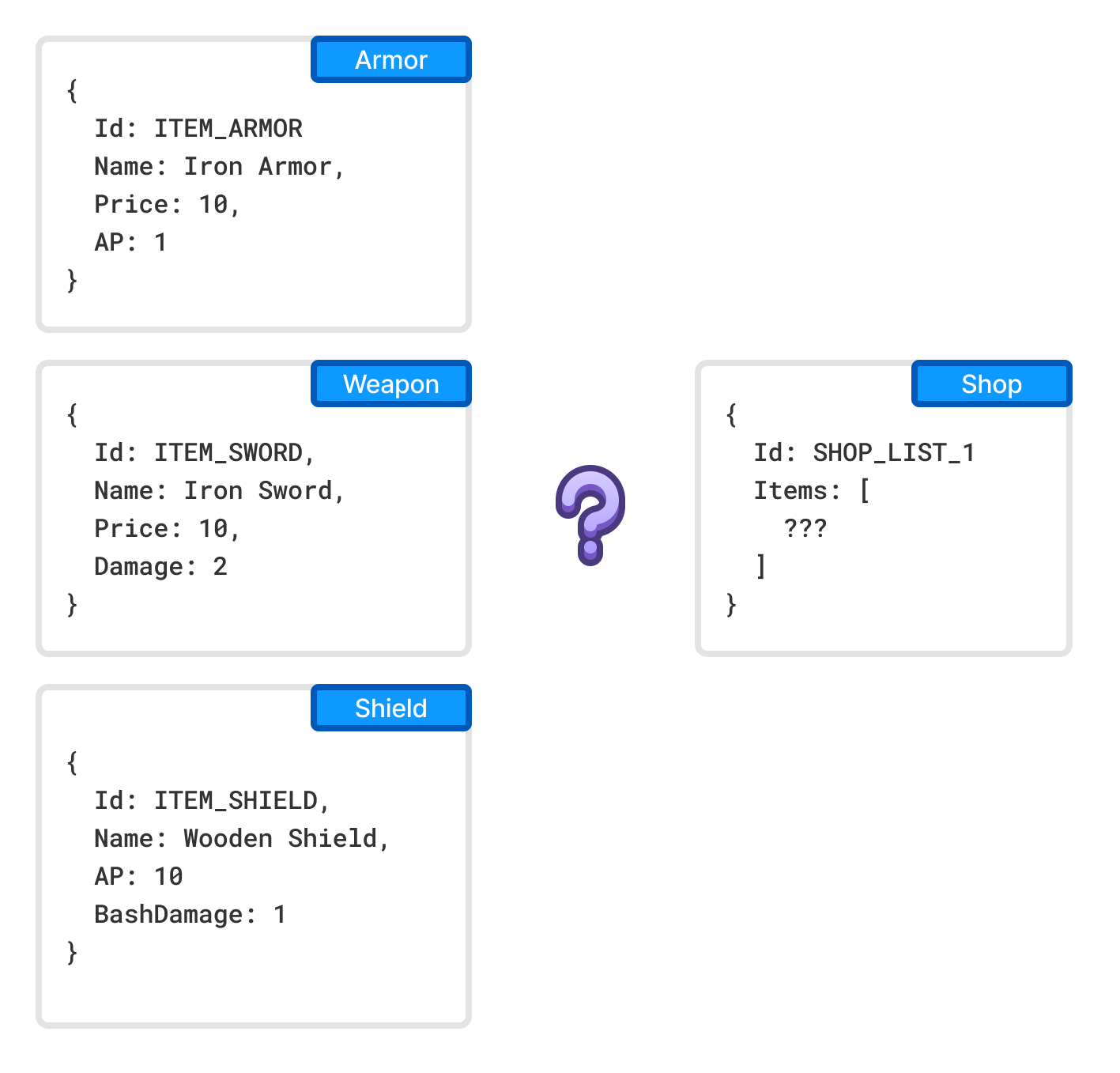
Without inheritance, here are three possible approaches:
1. Composition
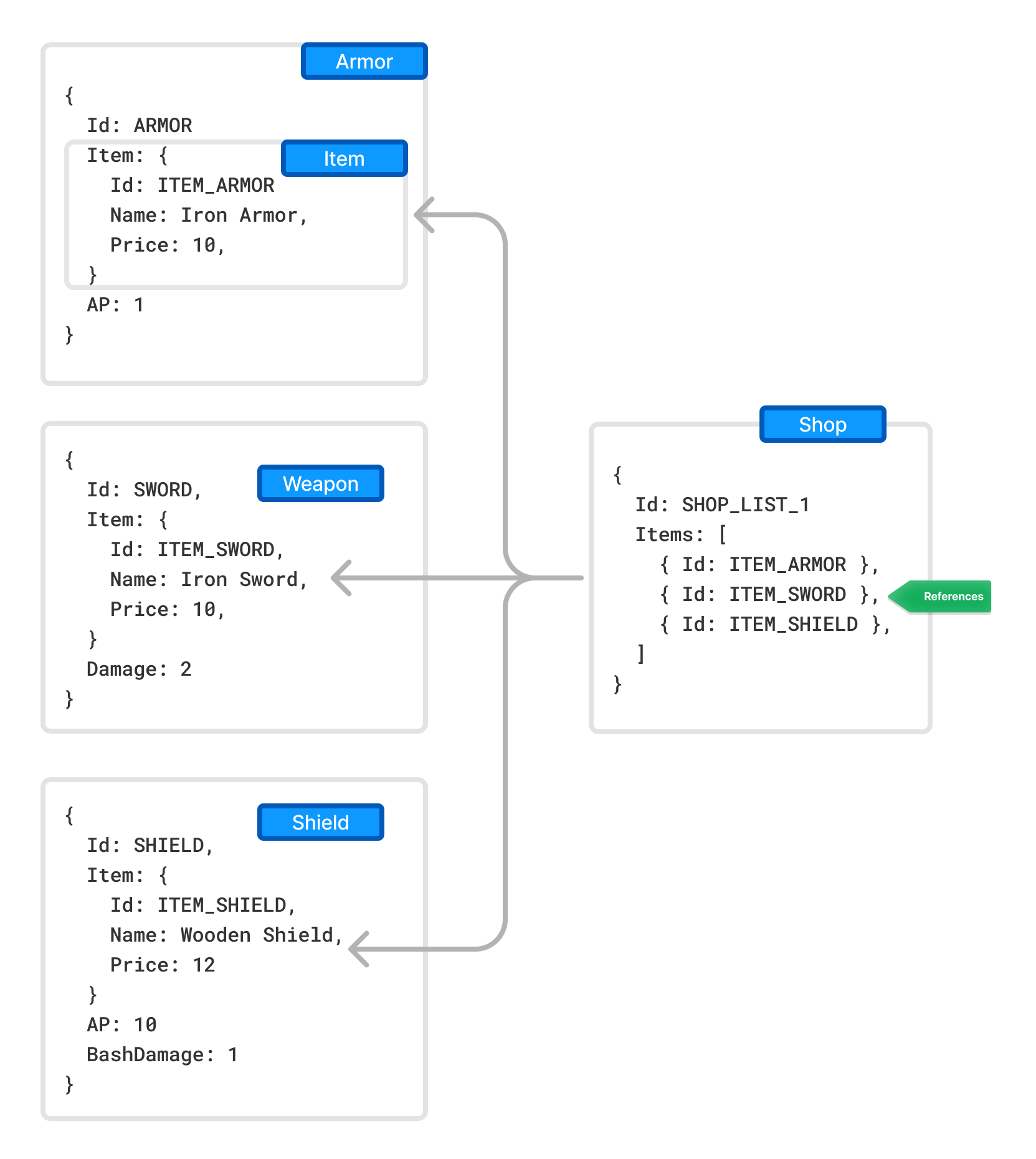
Extract the shared data from all sellable item types into a separate document type called Item. Each sellable document (e.g., Armor, Weapon, Shield) should include an embedded Item document containing store-relevant information. In the Shop list of sellable goods, you can store references to Item documents.
2. Merging
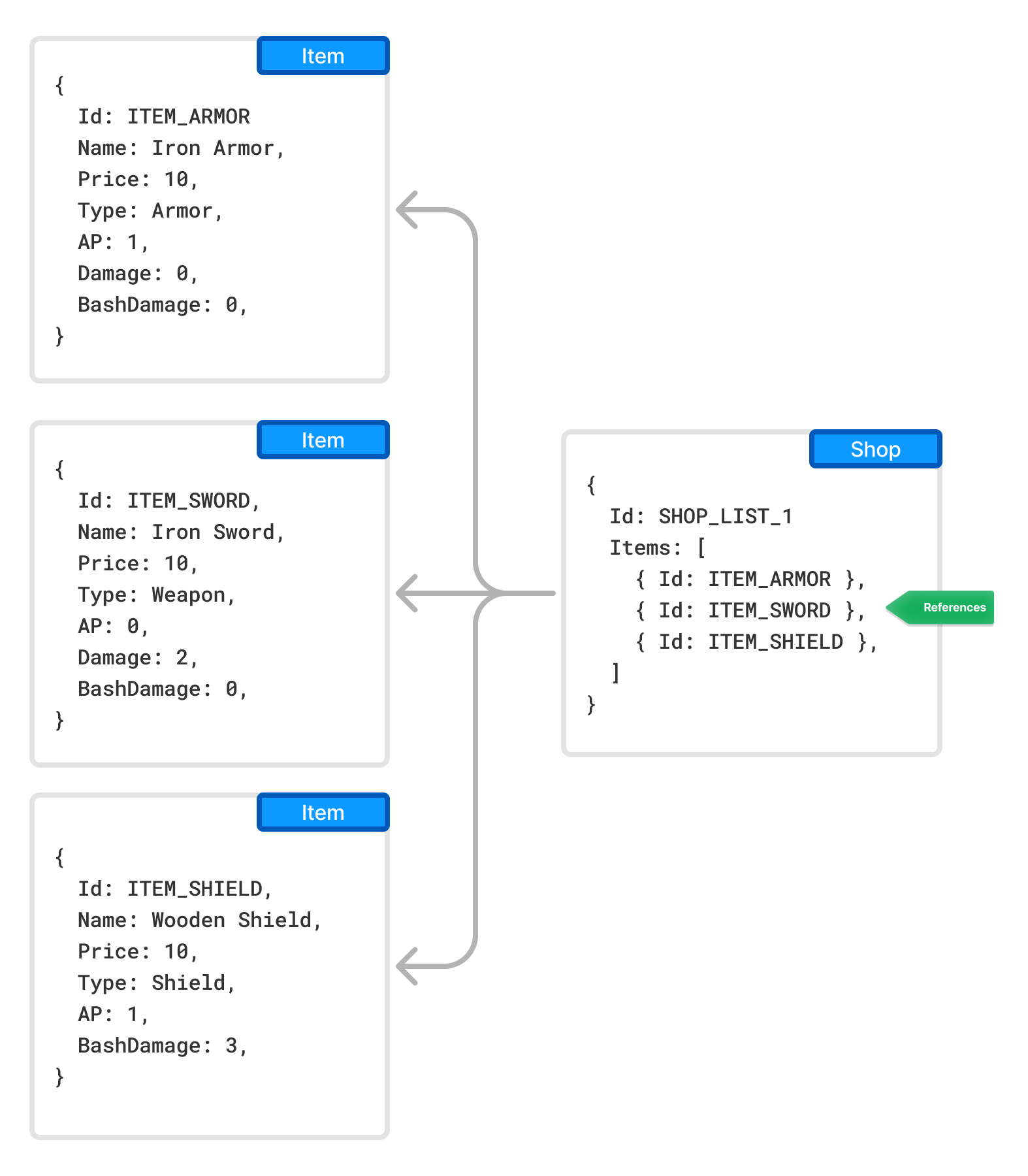
Alternatively, combine the three document types (Armor, Weapon, and Shield) into a single document type called Item. This document will contain fields for all three original types, along with an additional Type field to specify the item’s category. The Shop list can then store references to these unified Item documents.
3. Aggregation
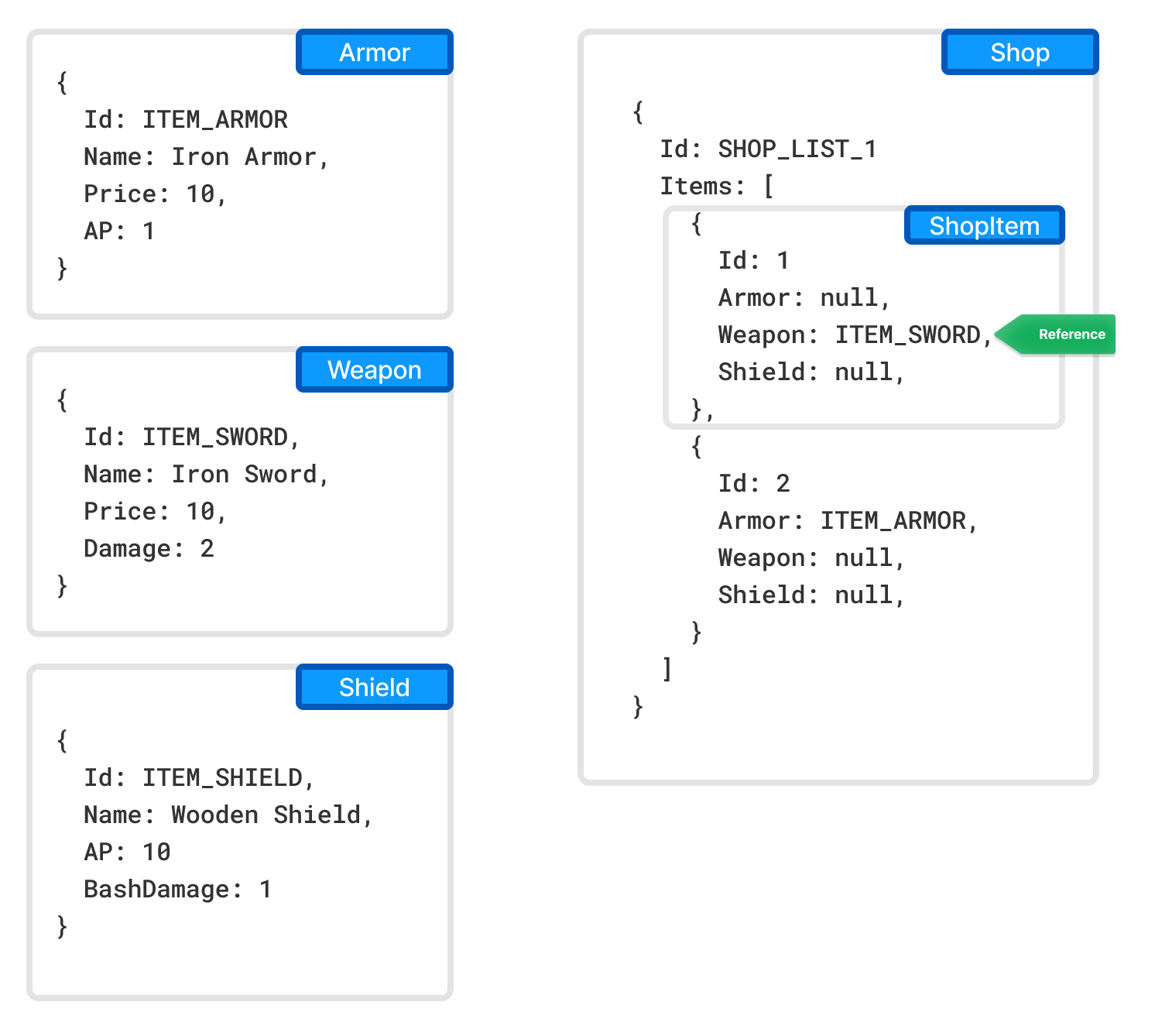
As a less elegant alternative, introduce a ShopItem type with fields referencing all possible document types (Armor, Weapon, and Shield). In each ShopItem document, only one of these fields will be filled, depending on the item’s type. The Shop list can then reference ShopItem documents.
4. Tagged Union (Recommended)
A more powerful and storage-efficient alternative to Aggregation is to use a Tagged Union Schema (also known as a Discriminated Union, Sum Type, or $oneOf). Tagged Unions allow documents of different shapes to coexist within the same collection or be embedded inside other documents, making them a natural fit when multiple heterogeneous document types must be handled together.
Union Schemas have several important distinctions from Aggregation:
They provide first-class support in the editor UI, making them more convenient to create and maintain than other inheritance alternatives.
Unassigned properties within a Tagged Union document are not stored and therefore take no space.
When used in this scenario, a ShopItem can be modeled as a Tagged Union that defines Armor, Weapon, and Shield as its possible variants.
Conclusion
Each of these methods has its trade-offs in terms of simplicity, flexibility, and performance. Choosing the right approach depends on your application’s requirements and the expected complexity of your data model.